Semax was developed from part of a hormone called ACTH. Selank was developed from a peptide called tuftsin. Both were designed using substances found naturally in the body, but they are distinct compounds. A finding about one does not automatically apply to the other.
Semax: nerve-cell support and the response to injury
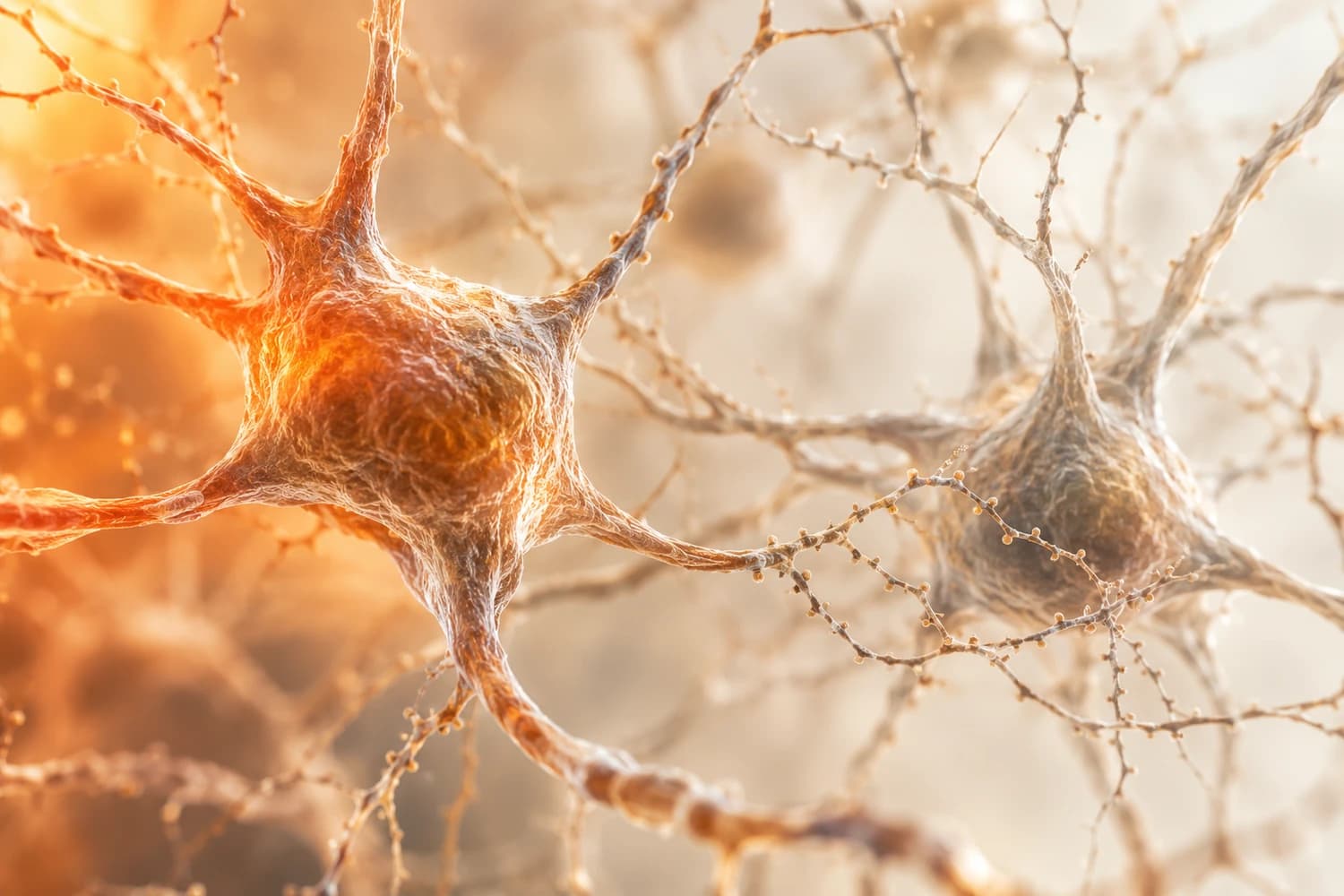
The Semax research covered here asks whether it influences processes that help nerve cells function, adapt, and respond to damage. This is why discussions of Semax often touch on learning, memory, and recovery.
In a 2007 rat study, Semax increased the activity of two genes involved in nerve-cell growth and survival in the hippocampus, a brain region involved in learning and memory. Results elsewhere in the brain were mixed. The finding gives researchers a reason to investigate cell-support processes, but it did not show better learning or memory.
A 2020 rat study examined the brain after blood flow was interrupted and restored. Semax was associated with changes in genes involved in inflammation and communication between nerve cells. These changes suggest possible ways it could influence the response to injury; they do not establish improved recovery or everyday focus in people.
Selank: nerve-cell signaling and the response to stress
The Selank research covered here centers on communication between nerve cells, including signaling linked to GABA, a chemical messenger involved in regulating nervous-system activity. Researchers are interested in whether changing this signaling could affect responses to stress.
A 2016 rat study found changes in genes involved in nerve-cell communication after Selank exposure. Some overlapped with changes seen after GABA exposure. That supports investigating a connection to GABA-related signaling, but it does not show that Selank acts exactly like GABA or establish how it would affect someone's mood.
This gives the comparison a useful distinction: the Semax papers here emphasize cell-support and injury-response processes, while the Selank paper emphasizes signaling that may be relevant to stress. These are overlapping areas of brain research, not two dependable categories of personal effects.